
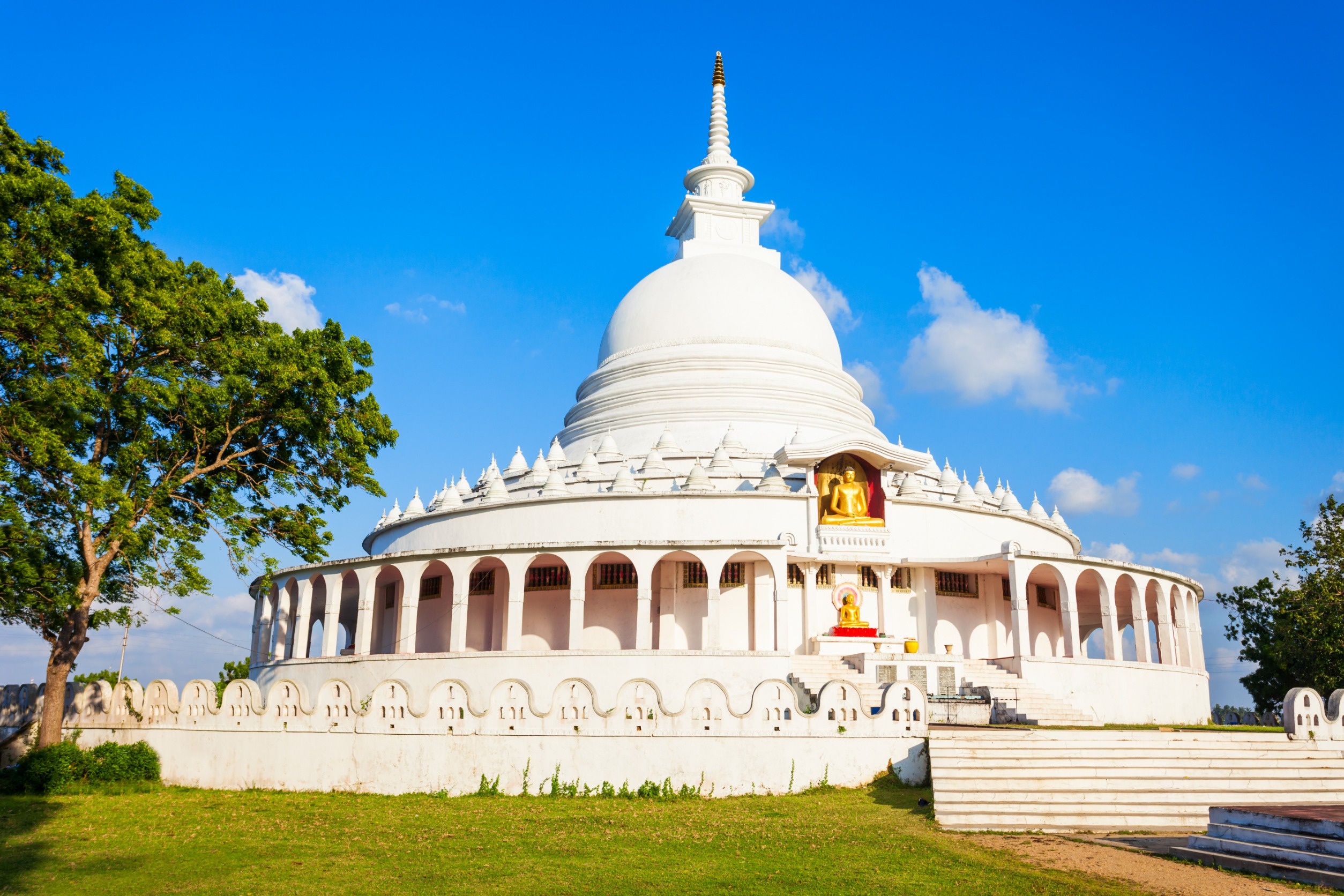
Sri Lanka can tempt you to head straight for the elephants, tea-covered mountains, and beaches.
But the best way to understand the island is to begin with its story.
The first three days of this journey take you through Kandy, Anuradhapura, Dambulla, Sigiriya, and Polonnaruwa. Places that reveal how religion, ancient kingdoms, royal power, and centuries of history shaped Sri Lanka.
This is where you encounter one of Buddhism’s most sacred relics, hidden in the hair of a princess as it was carried from India to Sri Lanka. Where ancient capitals preserve the remains of kingdoms that flourished more than a thousand years ago. Where Buddhist temples disappear inside enormous caves. And where a king transformed a 660-foot rock into a fortress and royal palace that still rises dramatically above the surrounding plains.
But these first three days are not only about history.
They are about seeing Sri Lanka’s most famous ancient sites as parts of the same story.
You will move from the sacred heart of Kandy to the ancient kingdoms of Anuradhapura and Polonnaruwa, step inside the cave temples of Dambulla, and climb the extraordinary rock fortress of Sigiriya.
Each stop reveals a different chapter of Sri Lanka’s past, and together they turn the beginning of the trip into much more than a collection of famous landmarks.
In this guide, we’ll follow these first three days of the TravUp Sri Lanka itinerary step by step, with the stories behind the places, practical timing, and travel hacks that make the route easier on the ground.
Quick Answer
The best way to explore Sri Lanka’s Cultural Triangle on a 10-day trip is to begin in Kandy, then continue to Anuradhapura, Dambulla, Sigiriya, and Polonnaruwa over the first three days. This order works because it gives the rest of the journey cultural context before the route moves into wildlife, tea country, rainforest, and coast.
In this TravUp route, Day 1 focuses on Kandy’s sacred and royal history, Day 2 covers Anuradhapura and Dambulla, and Day 3 centers on Sigiriya Rock Fortress before the itinerary continues toward Minneriya and Sri Lanka’s hill country.
Why Start in Kandy Instead of Colombo or the Coast?
This is important because the article’s argument is sequencing. Add a short section explaining:
- Colombo is not necessary as the first overnight base.
- Kandy gives the trip immediate cultural context.
- Starting with beaches weakens the narrative arc.
- Cultural Triangle first makes Sigiriya, Minneriya, and the tea country feel more meaningful.
Day 1: Kandy City – temples, gardens and dances
The first day introduces you to Sri Lanka through its cultural and religious heart.
You begin with one of Buddhism’s most sacred relics and the last royal capital of the Sinhalese kings, then move through royal history, tropical gardens, traditional dance, and a hilltop view over Kandy.
8:00-9:00 AM — Routine issues: money and sim-card
Before sightseeing begins, take an hour to handle the practical basics.
If you need cash, head to the Bank of Ceylon near Kandy Lake to exchange currency or withdraw Sri Lankan rupees.
Money hack: don’t exchange too much at once. Even $100 turns into a surprisingly thick stack of rupees, and Bank of Ceylon ATMs charge a lower withdrawal fee than many others.
If you did not buy a SIM card at the airport, stop by the Dialog store nearby. Bring your passport and phone.
9:00 AM-12:00 PM — Sacred City of Kandy, Temple of the Buddha’s Tooth, Royal Palace
Start in the Sacred City of Kandy, the last capital of the Sinhalese kings and one of Sri Lanka’s most important religious centers.
We’re entering the sacred land. The Temple of the Sacred Tooth Relic is a gem in Kandy buddhism heritage. We will see the most significant artifact kept there – Buddha Tooth.
According to Buddhist tradition, when King Guhasiva feared the Sacred Tooth would fall into enemy hands, his daughter Princess Hemamala secretly carried it from India hidden inside her elaborate hairstyle. Disguised as pilgrims, she and her husband reached Sri Lanka and brought the relic to Anuradhapura.
And Anuradhapura is where we are heading tomorrow. The story of these first three days is already beginning to connect.
You can also experience the national Puja Ceremony.
Key hack: bring a pair of socks. You must remove your shoes before entering the temple complex. Keeping socks in your day bag makes exploring much more comfortable than walking barefoot.
Then we go on a journey through the fascinating history and architectural wonders of the residence of the Kandy monarchs. Old Palaces, Audience Hall and even King’s Harem Quarters will take you back in time.
Route hack: the Queen’s Bathing Pavilion requires a 7 to 10-minute detour outside the fenced area. If you want to save time, you can also view it through the fence before continuing.
12:00-1:00 PM — Lunch in historical place
Today we have lunch in a very special place with impressive history. The building of the Royal Bar & Hotel Restaurant used to be a mansion of aristocrats, a British officers’ club, and even the estate of British tea planters. Now there is a boutique hotel in addition to the restaurant.
1:00-3:30 PM — Royal Botanical Garden Peradeniya
After lunch, drive about 30 minutes to the Royal Botanical Gardens of Peradeniya.
Get ready for a magnificent botanical paradise! The Royal Botanical Garden in Peradeniya is one of the oldest and finest botanical gardens in a whole Asia. The garden also holds some remarkable living history. In 1891, Prince Nicholas Romanov, the future last Emperor of Russia Nicholas II, planted an ironwood tree here. Nearby stands a saraca tree planted by Yuri Gagarin, the first spaceman, in 1961. Local legend says it stopped growing after the cosmonaut’s death.
Spend around two hours among exotic orchids, towering palms, giant trees, a pond, memorial trees planted by historical figures, and the suspension bridge across the Mahaweli River.
3:30-6:00 PM — Kandy Traditional Fire Dance Show
Kandy Cultural Show is a must when you visit Sri-Lanka. You will experience a vibrant and captivating showcase of traditional Sri Lankan dance and music! Dances and acrobatics, drums and bright national costumes and even fire-show – all this will happen before your eyes.
The schedule leaves time to buy tickets and take a short break before the show, so there is no need to rush from the gardens.
6:00-7:00 PM — Bahirawakanda Temple at Sunset
Now we are going to conquer the Bahirawakanda Hill. Let’s enjoy the night city!
Bahirawakanda Temple is mostly known for its iconic white Buddha statue that overlooks the city of Kandy. As always, a mysterious legend is guaranteed.
7:00-8:30 PM — Sri Lankan Dinner
End the day with Sri Lankan food and a well-earned dinner.
By now, Kandy has introduced both the sacred and royal history of the island. And the journey of the Sacred Tooth has already pointed us toward the next chapter.
Day 2: Ancient Anuradhapura and Mysterious Caves of Dambulla
Day two takes you much deeper into Sri Lanka’s past.
You leave Kandy for Anuradhapura, the ancient capital that shaped Sri Lankan civilization for 13 centuries. Sacred trees, enormous dagobas, monasteries, and royal ruins fill the first part of the day.
Then the route moves to Dambulla and its ancient cave temples before ending near Sigiriya.
7:00-11:00 AM — Transfer to Anuradhapura
Check-out and leave Kandy early for the drive to Anuradhapura.
The journey takes about four hours, so this is a good time to settle in and get some context for the ancient capital before you arrive.
And remember the Sacred Tooth story from yesterday? Anuradhapura is where Princess Hemamala and Prince Dantha first brought the relic after their journey from India.
For specific recommendations, check out our post How to Get Around Sri Lanka.
11:00-11:30 AM — Sacred Bodhi Tree and Bronze Palace
Begin with one of Anuradhapura’s most sacred sites: the Sri Maha Bodhi.
The tree was grown from a cutting of the original Bodhi Tree in Bodh Gaya, India, under which the Buddha is believed to have attained enlightenment.
Nearby are the ruins of the magnificent Bronze Palace. The archaeological zone covers a vast area, so it is much easier to travel between its main sites by car.
11:30 AM-12:30 PM — Isurumuni Monastery
Continue to the ancient Isurumuni Monastery on the shores of Lake Thissa.
Founded in the 3rd century BC, the monastery played an important role in the spread of Buddhism in Sri Lanka.
12:30-1:00 PM — Dagoba Ruwanweli and Thuparam Dagoba
Next come two of Anuradhapura’s ancient dagobas, each connected with its own history, legends, and sacred relics.
This is a short stop, so use the time to explore rather than trying to cover every detail of the enormous archaeological zone.
1:00-1:45 PM — Mahasena Palace and Abhayagiri Monastery
Continue to the remains of Mahasena Palace, once part of Anuradhapura’s royal and administrative center.
Nearby, Abhayagiri was once one of the largest monasteries on the island and provided shelter for around 5,000 monks.
You’ll also see the 246-foot Abhayagiri stupa, the ancient Kuttam-Pokuna pools, an impressive example of early engineering, and a 4th-century seated Buddha.
1:45-2:15 PM — Dagoba Jethavanarama
The final stop in Anuradhapura is Jethavanarama.
The structure once reached about 525 feet, making it one of the tallest structures in the ancient world, surpassed at the time only by the Egyptian pyramids.
That scale is difficult to understand until you are standing beside it.
2:15-3:15 PM — Lunch
Enjoy your lunch at a small café with a lovely cozy garden. The traditional Lankan lunch – curry, 6-8 small plates with different national dishes accompanied by a portion of rice. It’s highly recommended.
3:15-4:30 PM — Transfer to Dambulla
After lunch, leave Anuradhapura and drive to Dambulla, known for its Golden Temple and UNESCO-listed Cave Temple.
4:30-6:00 PM — Cave and Golden Temples of Dambulla
Explore the five caves of the Dambulla temple complex, filled with Buddha statues, historical figures, ancient paintings, and frescoes. Altogether, the caves contain around 150 images of the Buddha.
Timing hack: the Cave Temple ticket counter closes at 5:00 PM. With a 4:30 PM arrival, buy your ticket first rather than beginning to explore the surrounding area.
And yes, keep socks again in your day bag. You’ll need to remove your shoes as usual before entering the sacred temple area.
6:00-7:00 PM — Transfer to Sigiriya
After a long day of ancient cities and temples, continue to your hotel near Sigiriya.
Tonight is deliberately quiet because tomorrow brings one of the biggest experiences of these first three days.
7:00-8:30 PM — Dinner
Have dinner and rest.
Today took you through centuries of Sri Lankan Buddhist and royal history. Tomorrow the story changes again, with Sigiriya Rock Fortress.
Day 3: Sigiriya Rock Fortress
The third morning is dedicated to one of Sri Lanka’s most iconic landmarks.
Today you climb Sigiriya Rock, explore the remains of the ancient palace, and see the frescoes, Mirror Wall, and Lion Rock gateway on the way to the summit.
Physical activity is guaranteed, but believe us, it’s worth it!
7:30-8:00 AM — Check-out
Check out of your hotel and get ready for the morning at Sigiriya Rock Fortress.
8:00 AM-12:30 PM — Sigiriya: Palace in the Rock
Get ready for an unforgettable adventure at Sigiriya Rock, an ancient marvel and UNESCO World Heritage Site.
Discover the captivating frescoes, the Mirror Wall, and the Lion Rock gateway as you hike to the summit. From the top, take in the breathtaking views and immerse yourself in the rich history of this iconic fortress.
Key hack: Start your climb early, before the strongest midday heat. Sigiriya has around 1,200 steps, so wear comfortable shoes, bring enough water, and take breakfast with you to enjoy at the summit with the view.
12:30-1:30 PM — Lunch
We are going to have a mouthwatering Sri Lankan lunch in a charming café, surrounded by nature and overlooking the incredible Lion Rock. Enjoy the perfect blend of stunning views and aromatic local cuisine.
Frequently Asked Questions (FAQ)
How many days do you need for Sri Lanka’s Cultural Triangle?
Three days is enough to experience the main Cultural Triangle route if the trip is carefully sequenced around Kandy, Anuradhapura, Dambulla, Sigiriya, and Polonnaruwa.
Should I visit Kandy before Sigiriya?
Yes, on this itinerary Kandy works best first because it introduces Sri Lanka’s Buddhist and royal history before the route continues into the ancient capitals and Sigiriya.
Is Sigiriya part of Sri Lanka’s Cultural Triangle?
Yes. Sigiriya is one of the most iconic stops in Sri Lanka’s Cultural Triangle and works especially well after Anuradhapura and Dambulla because the historical context builds across the route.
Can you visit Anuradhapura and Dambulla in one day?
Yes, but the day needs an early start and careful timing. This TravUp route leaves Kandy early, visits Anuradhapura first, then continues to Dambulla before ending near Sigiriya.
Is the Cultural Triangle worth it on a 10-day Sri Lanka trip?
Yes. It gives the trip historical, religious, and cultural depth before the itinerary moves into elephants, tea country, rainforest, and beaches.
Why Start Sri Lanka This Way?
Three days are enough to understand why Sri Lanka should not begin with a checklist of isolated landmarks.
Kandy introduces the island through living Buddhist traditions and royal history. Anuradhapura takes you much further back, into the ancient capital, sacred monasteries, and monumental dagobas. Dambulla brings that history inside its painted caves. And Sigiriya ends this cultural introduction from the top of one of Sri Lanka’s most extraordinary ancient sites.
The order matters.
Instead of simply moving between famous places, you begin to see how Sri Lanka’s religion, kingdoms, architecture, and legends connect.
That is what these first three days are designed to do. They give the rest of the journey context.
Planning the full route?
Start with our complete 10 Days in Sri Lanka itinerary, then use this guide to make the practical decisions easier. TravUp (iOS / Android) gives you the route, timing, navigation, and local context in one self-guided journey.