
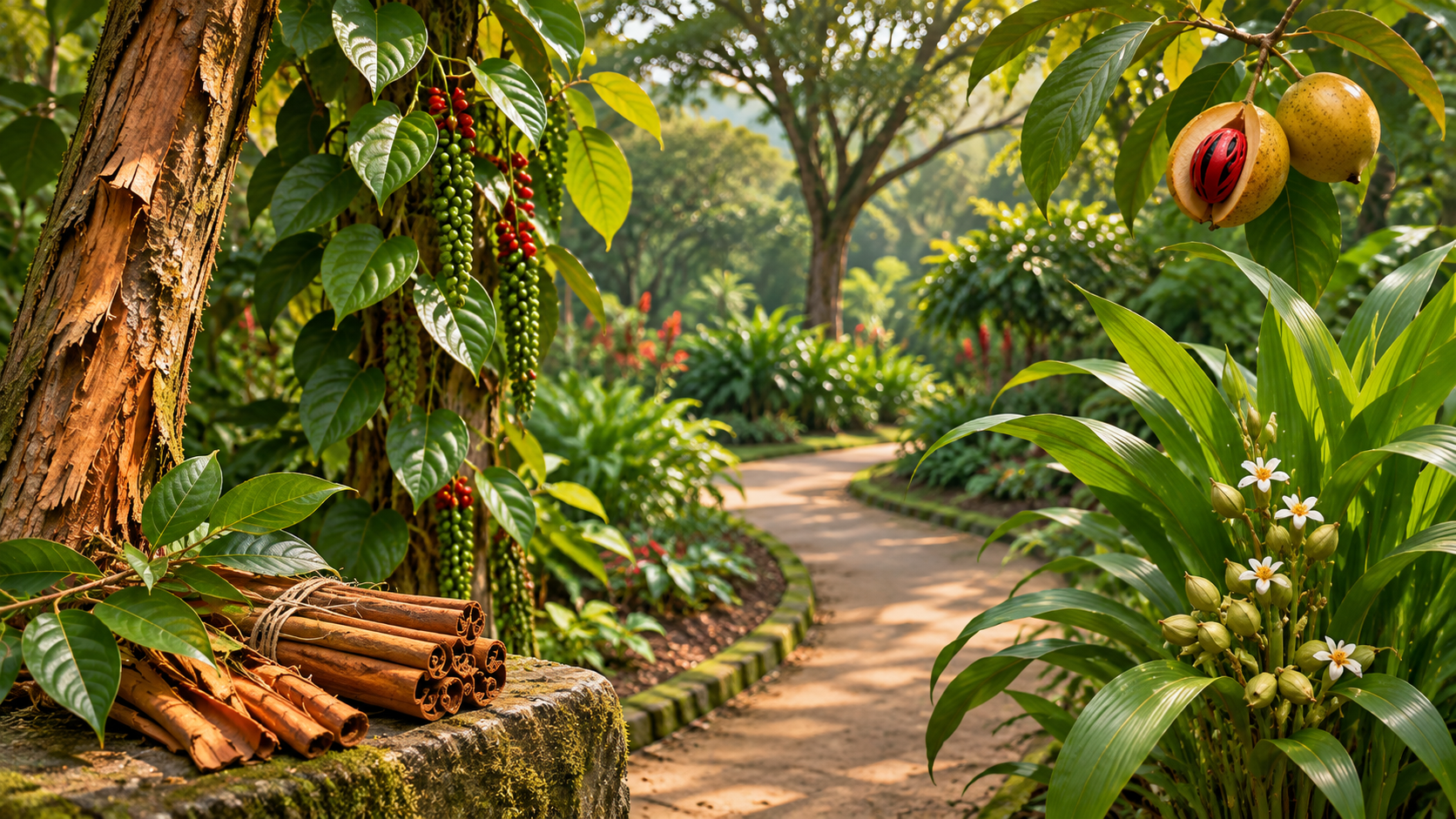
Sri Lanka’s spices are easy to recognize in a finished curry. It is much harder to imagine how they look before they reach the kitchen.
Cinnamon begins as tree bark. Black, white, green, and red peppercorns can all come from the same climbing vine. Nutmeg and mace grow inside a single fruit, while cardamom is harvested in small seed-filled pods.
Our 10-day Sri Lanka itinerary introduces these plants at the Spice Garden inside the Royal Botanic Gardens, Peradeniya, near Kandy. Instead of treating spices as souvenirs, the visit shows you how they grow, which parts of the plants become seasonings, and why the spice trade played such an important role in Sri Lanka’s history.
What Spices Can You See in a Sri Lanka Spice Garden?
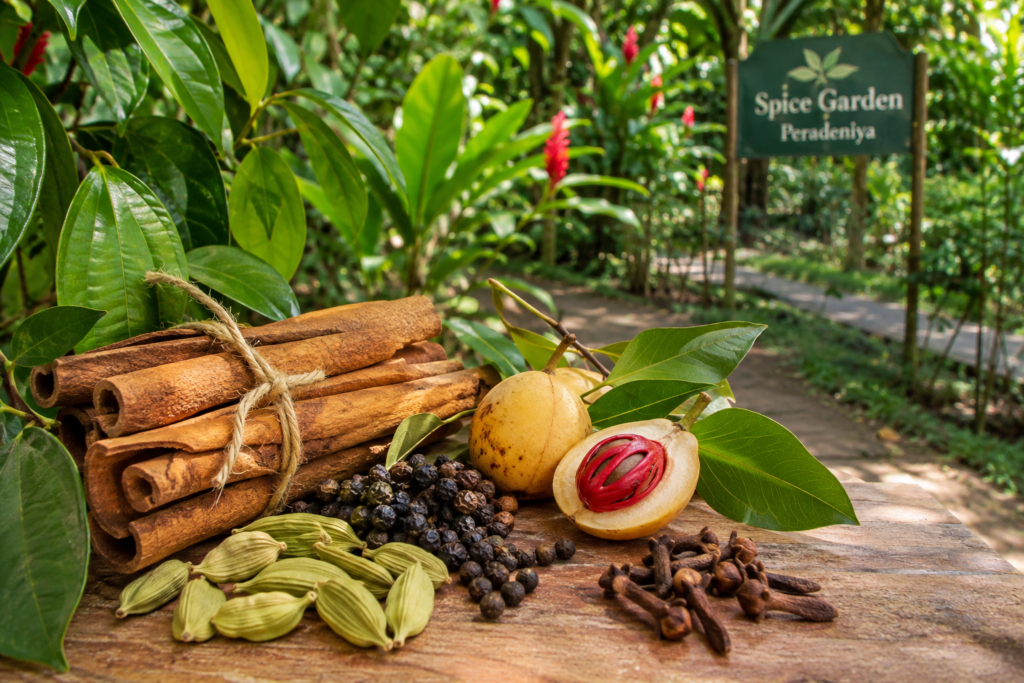
The Spice Garden at Peradeniya contains a representative collection of Sri Lanka’s best-known spices, including:
- Ceylon cinnamon
- Black pepper
- Cardamom
- Nutmeg and mace
- West Indian bay leaf
- Allspice
Some of the garden’s oldest nutmeg trees were planted in 1840 and are still producing fruit. The collection is located on the right side of the main entrance, making it easy to include in a wider walk through the botanical gardens.
The value of the stop is not simply seeing the plants. It is learning to recognize which part of each plant becomes the spice you know.
Visiting Peradeniya Spice Garden Near Kandy
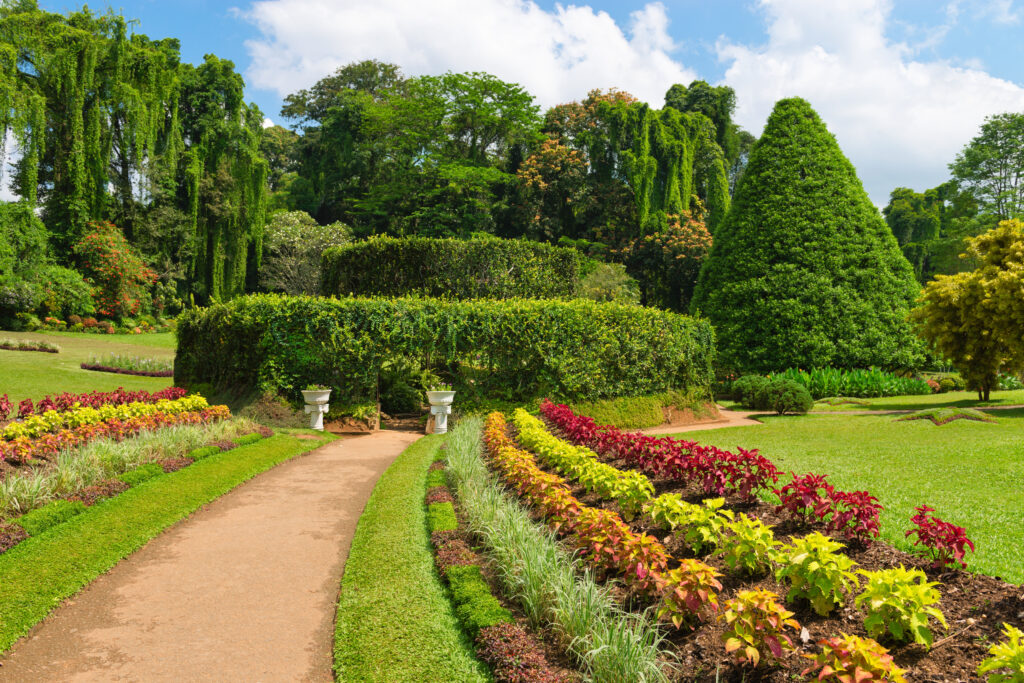
The Spice Garden is part of the Royal Botanic Gardens in Peradeniya, approximately 3.5 miles west of Kandy.
The wider site has royal associations dating to 1371, when King Wickramabahu III kept court at Peradeniya. However, the present botanical institution was established in 1821. Its early cultivated areas included cinnamon and coffee, connecting the garden’s scientific history with crops that shaped the island’s economy.
Today, the Royal Botanic Gardens cover 147 acres and contain more than 4,000 plant species. The Spice Garden is only one part of the collection, alongside orchids, palms, medicinal plants, bamboo, flowering trees, and the National Herbarium.
In TravUp 10 days in Sri Lanka itinerary, Peradeniya belongs to the first day in Kandy. The route uses the garden as an introduction to the island’s tropical vegetation, agriculture, food, and trade before continuing to Kandy’s cultural landmarks and traditional dance performance.
This placement matters. During the following days, you will encounter spices repeatedly in curries, rice dishes, tea, desserts, markets, traditional remedies, and local products. Seeing the living plants first makes those later experiences more colorful.
6 Spices to Discover at Peradeniya Botanical Gardens
Ceylon Cinnamon: Sri Lanka’s Famous True Cinnamon
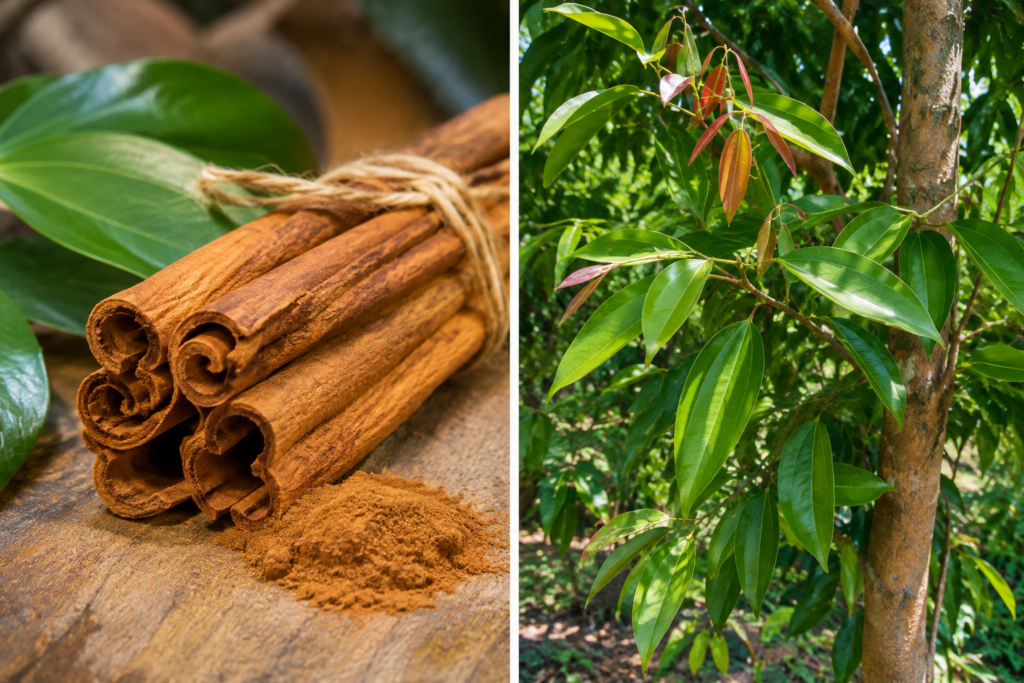
Ceylon cinnamon does not grow as the familiar rolled stick seen in a kitchen.
It comes from the inner bark of Cinnamomum verum, also known as Cinnamomum zeylanicum, a tree indigenous to Sri Lanka. The outer bark is removed, and the delicate inner layers are carefully peeled away.
As the bark dries, it curls. Skilled processors place several thin pieces inside one another to create the layered quills associated with Ceylon cinnamon.
This structure helps distinguish true cinnamon from cassia, the darker, thicker, and harder product commonly sold as cinnamon in many countries. Ceylon cinnamon is usually lighter in color, more fragile, and more delicate in flavor.
Sri Lanka supplies more than 85% of the world market for true cinnamon. The country also protects the name through its Pure Ceylon Cinnamon certification and geographical indication system.
In the Spice Garden, look beyond the leaves. The important part of the plant is the bark beneath them.
Ceylon cinnamon is still processed largely by hand. After the rough outer bark is removed, the inner bark is loosened and peeled away in thin strips. As these strips dry, they begin to curl, creating Ceylon cinnamon.
Sri Lankan Black Pepper: How Peppercorns Grow
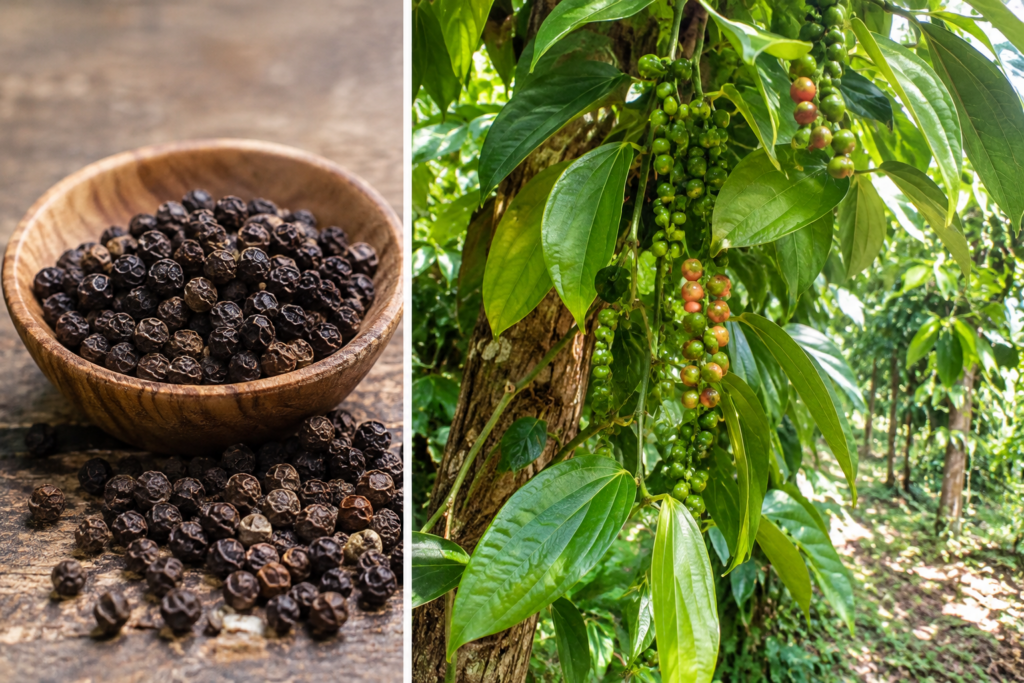
Pepper grows as a woody climbing vine rather than a small bush.
The clusters of berries may not immediately resemble the peppercorns found in a grinder. Their final color and character depend on when the berries are harvested and how they are processed.
Green peppercorns are picked before full maturity and preserved without allowing them to darken. Black pepper is usually made from green or slightly immature berries that are blanched and dried. The skin darkens and wrinkles during the drying process.
White pepper also comes from Piper nigrum, but the outer layer of the ripe berry is removed. Red peppercorns are fully ripened berries that retain their outer skin.
They should not be confused with red chili peppers or paprika, which come from plants in the Capsicum genus.
Sri Lankan pepper is known for its high piperine content. Piperine is the compound responsible for the characteristic pungency of pepper. Ceylon pepper can also carry floral and citrus notes alongside its heat.
Knowing this changes the way you look at the vine. Black, white, green, and red peppercorns are not necessarily four unrelated spices. They can represent different stages and processing methods applied to the same fruit.
Sri Lankan Cardamom: The Queen of Spices
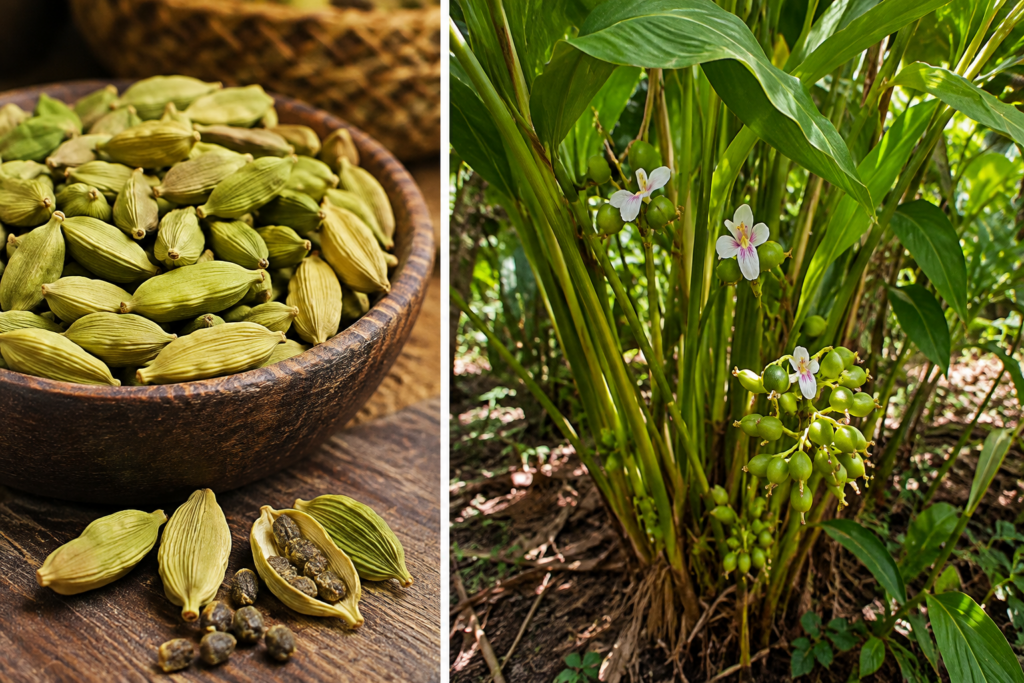
Cardamom is sometimes called the Queen of Spices, with black pepper traditionally known as the King.
The plant is a perennial herb related to ginger. Its value lies inside the small pods, which contain clusters of dark aromatic seeds.
Sri Lanka primarily produces light green cardamom. The pods may be used whole to flavor a dish, but they are generally removed before eating. The seeds can also be crushed or ground and added to curries, rice, tea, desserts, and spice mixtures.
Because cardamom is one of the most expensive spices by weight, seeing the plant helps explain why. The finished product depends on harvesting and drying many relatively small pods while preserving their aroma and color.
Nutmeg and Mace: Two Sri Lankan Spices from One Fruit
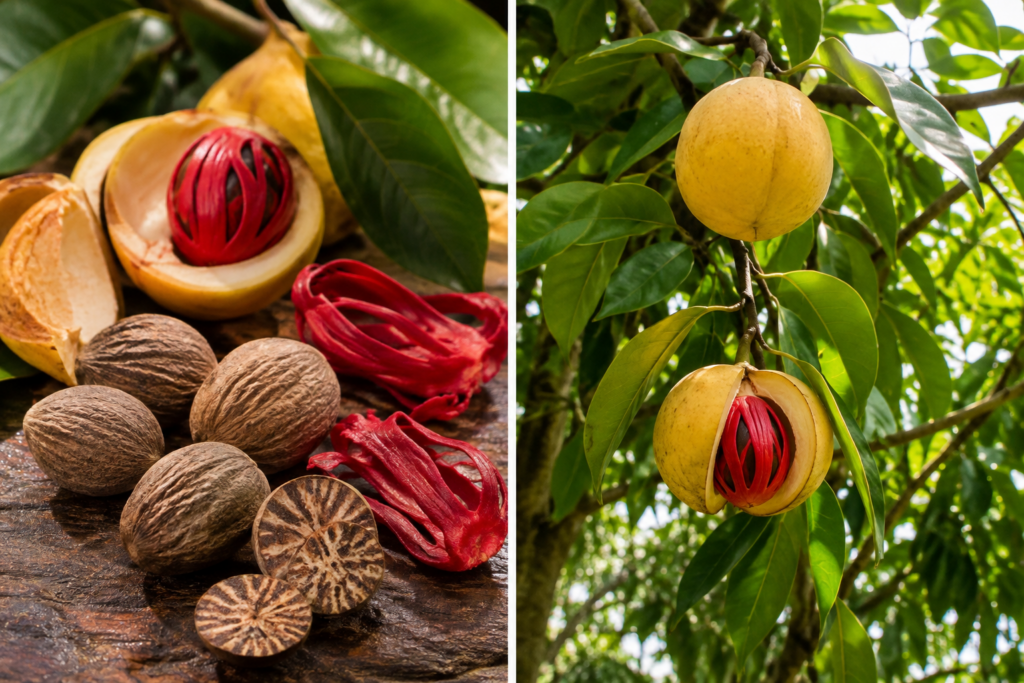
Nutmeg offers one of the garden’s best visual surprises. A single nutmeg fruit produces two different spices.
When the ripe yellow fruit splits open, it reveals a glossy seed wrapped in a bright red, lace-like covering. The seed becomes nutmeg. The red covering, called an aril, becomes mace.
The two spices are related but not identical. Nutmeg has a warm, rich flavor, while mace is generally lighter and more delicate.
Both appear in curries, baked goods, confectionery, and drinks. Their oils are also used in food production, cosmetics, and perfumery.
Nutmeg is not native to Sri Lanka. It originated in the Moluccas, historically known as the Spice Islands, in present-day Indonesia. Colonial powers later introduced commercial cultivation to other tropical regions as they attempted to break the Moluccan monopoly.
The trees adapted particularly well to Sri Lanka’s central districts. Today, much of the country’s nutmeg cultivation is concentrated around Kandy, Matale, and Kegalle.
That history becomes tangible at Peradeniya, where nutmeg trees planted in 1840 remain part of the living collection.
West Indian Bay Leaf and Allspice: Two Distinct Spices
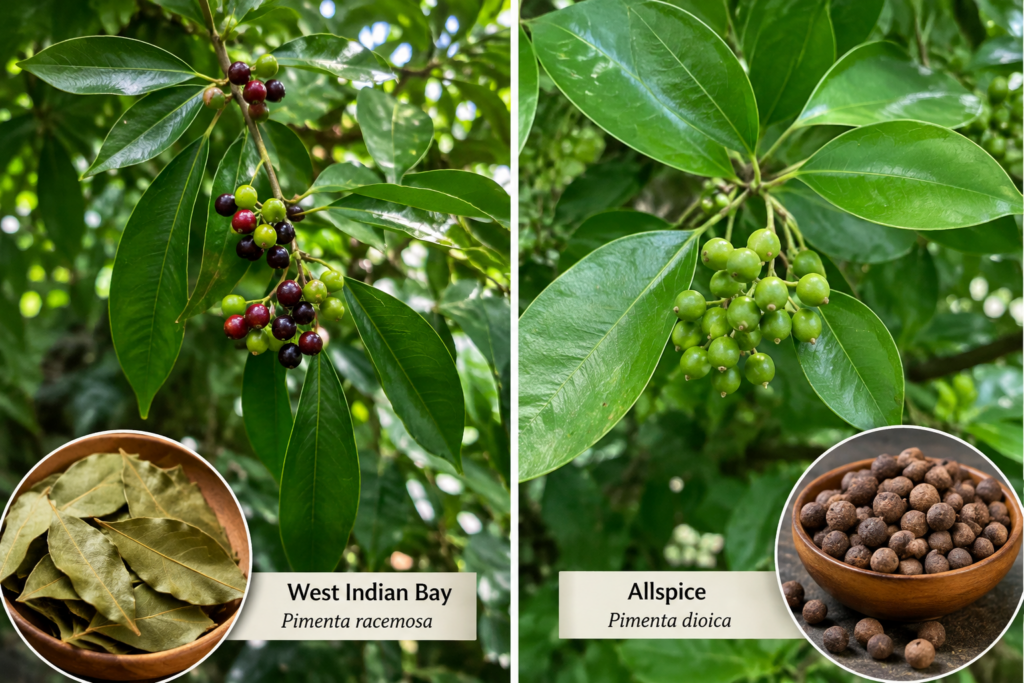
The garden also includes plants that may look familiar but require a closer reading of their labels.
The bay leaf listed in the official collection is Pimenta racemosa, commonly known as West Indian bay. It is not the same plant as Mediterranean bay laurel, Laurus nobilis, which is widely used in European cooking.
Allspice comes from Pimenta dioica. Its English name reflects an aroma often compared with a combination of cinnamon, cloves, pepper, and nutmeg, but allspice is a separate plant rather than a mixture.
These examples reveal one of the most useful lessons of a botanical garden: common names can be misleading. The plant label and scientific name tell you exactly what you are seeing.
The History of Sri Lanka’s Spice Trade
Sri Lanka’s spices are more than ingredients. They connect the island’s climate, agriculture, cuisine, trade, and colonial history.
Cinnamon was especially important.
Arab merchants traded Sri Lankan cinnamon long before European powers reached the island. Later, the Portuguese, Dutch, and British sought control over its production and export.
Cinnamon was valuable because it was rare, portable, aromatic, and useful in food, medicine, perfumery, and preservation. Control of the spice trade meant control of revenue, ports, labor, and land.
Pepper, cardamom, nutmeg, cloves, and other crops expanded that commercial importance. Sri Lanka became known internationally as a source of spices with distinctive flavors shaped by the island’s tropical growing conditions.
The same plants also became fundamental to Sri Lankan cooking.
A Sri Lankan curry is not defined by one universal powder. Its flavor may be built from different combinations of roasted or unroasted spices, including cinnamon, pepper, cardamom, cloves, coriander, cumin, fenugreek, turmeric, chili, curry leaves, ginger, and mustard seeds.
The balance changes according to the main ingredient, the region, the household, and the cook.
This is why the Spice Garden works so well near the beginning of the journey. It gives you a visual vocabulary for meals you will eat throughout the route.
Peradeniya Botanical Gardens: Tickets, Hours and Location
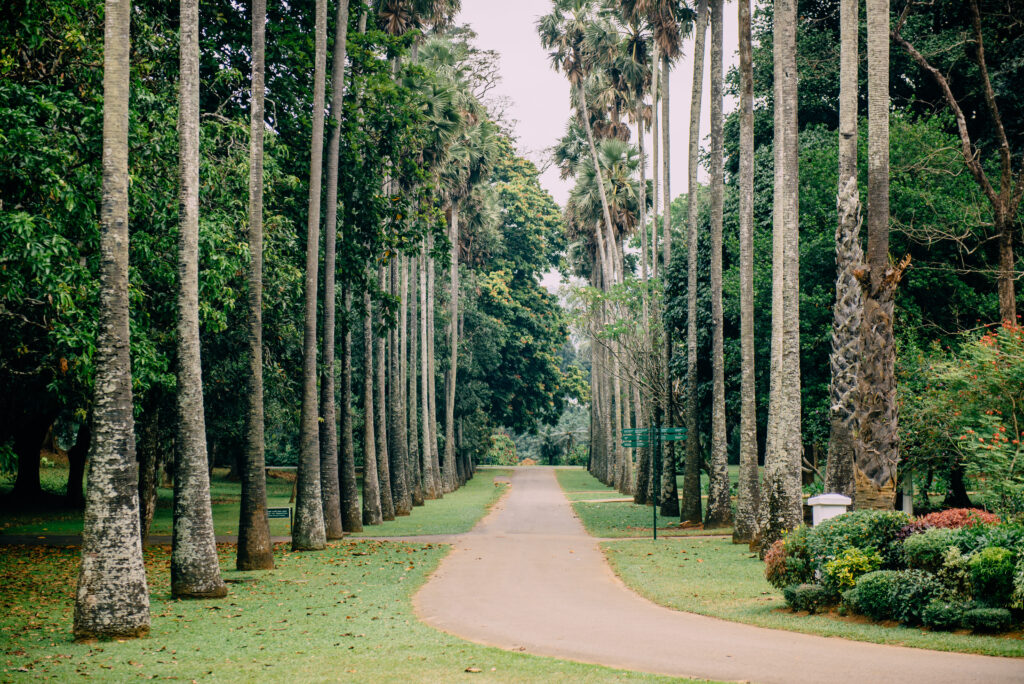
The Spice Garden is inside the Royal Botanic Gardens, Peradeniya. It is not a separate attraction and does not require an additional entrance ticket.
Location: Colombo Rd, Kandy 20400, Sri Lanka
The official garden is open every day of the year from 7:30 a.m. to 6:00 p.m. Ticket sales close at 5:00 p.m.
At the time of writing, the official foreign visitor rates are:
- Foreign adult, over 12 yo: LKR 3,540 (USD 11)
- Foreign student with valid proof: LKR 2,360 (USD 7.5)
- Foreign child 5-12 yo: LKR 1,770 (USD 5.5)
Prices and opening arrangements can change, so check the official Royal Botanic Gardens website before your visit.
Is Peradeniya a Commercial Spice Garden?
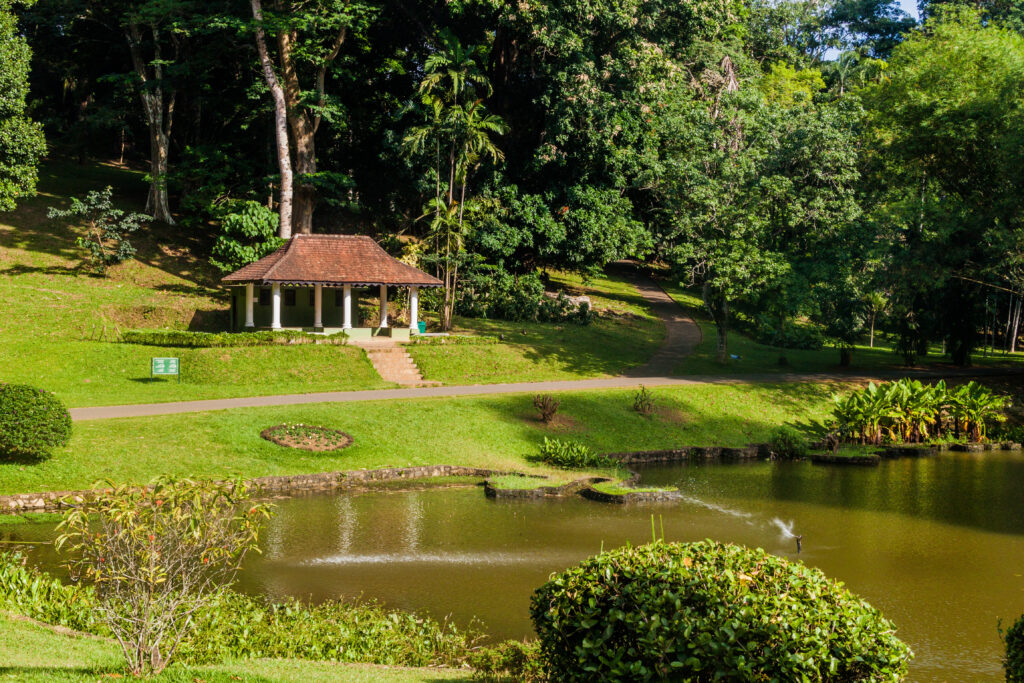
No. The Spice Garden described in our itinerary is a botanical collection inside the government-managed Royal Botanic Gardens.
Sri Lanka also has commercial spice and herbal gardens, particularly along popular travel routes. Some provide useful demonstrations, while others are structured mainly around product sales.
At Peradeniya, the spice collection forms part of a much larger botanical and educational institution. You can study the plants without making a separate excursion or building the visit around a shop.
Where to Buy Authentic Sri Lankan Spices
You can buy authentic spices in Sri Lanka, but packaging and labeling determine both quality and authenticity.
For cinnamon, look for a sealed product clearly identified as Ceylon cinnamon or Cinnamomum verum. The Pure Ceylon Cinnamon mark is intended to distinguish cinnamon grown and processed in Sri Lanka from cassia and blended products.
For other spices, choose properly packaged products with clear names, origin information, and expiration dates rather than unmarked powders whose contents are difficult to verify.
What to Look for When Visiting a Sri Lanka Spice Garden
Focus on how different the living plants look from the finished spices:
- Cinnamon is harvested from bark.
- Pepper grows in clusters on a climbing vine.
- Cardamom is collected as seed-filled pods.
- Nutmeg and mace come from different parts of one fruit.
- Allspice is a single plant, not a prepared blend.
Those five observations make the rest of the island’s food culture much easier to read.
Explore Peradeniya with TravUp’s Sri Lanka Audio Guide
A botanical label can identify a plant. It cannot always explain why that plant matters.
TravUp’s audio guide connects each spice with the part you use, the way it is processed, its role in Sri Lankan cuisine, and the history that made it valuable.
The story reaches you while you are standing beside the plant rather than hours later, after you have left the garden. This narrows your attention to the details that are easy to overlook and turns a collection of trees and vines into a readable part of Sri Lanka’s story.
Our route then carries that context forward into Kandy, the Cultural Triangle, the tea country, and the coast.
Planning a trip to Sri Lanka? Start with our 10 days in Sri Lanka itinerary to see how Peradeniya, Kandy, the ancient cities, wildlife, mountains, rainforest, and beaches fit into one continuous route.
Download TravUp for the route, navigation, and immersive audio stories that help you understand Sri Lanka as you travel.